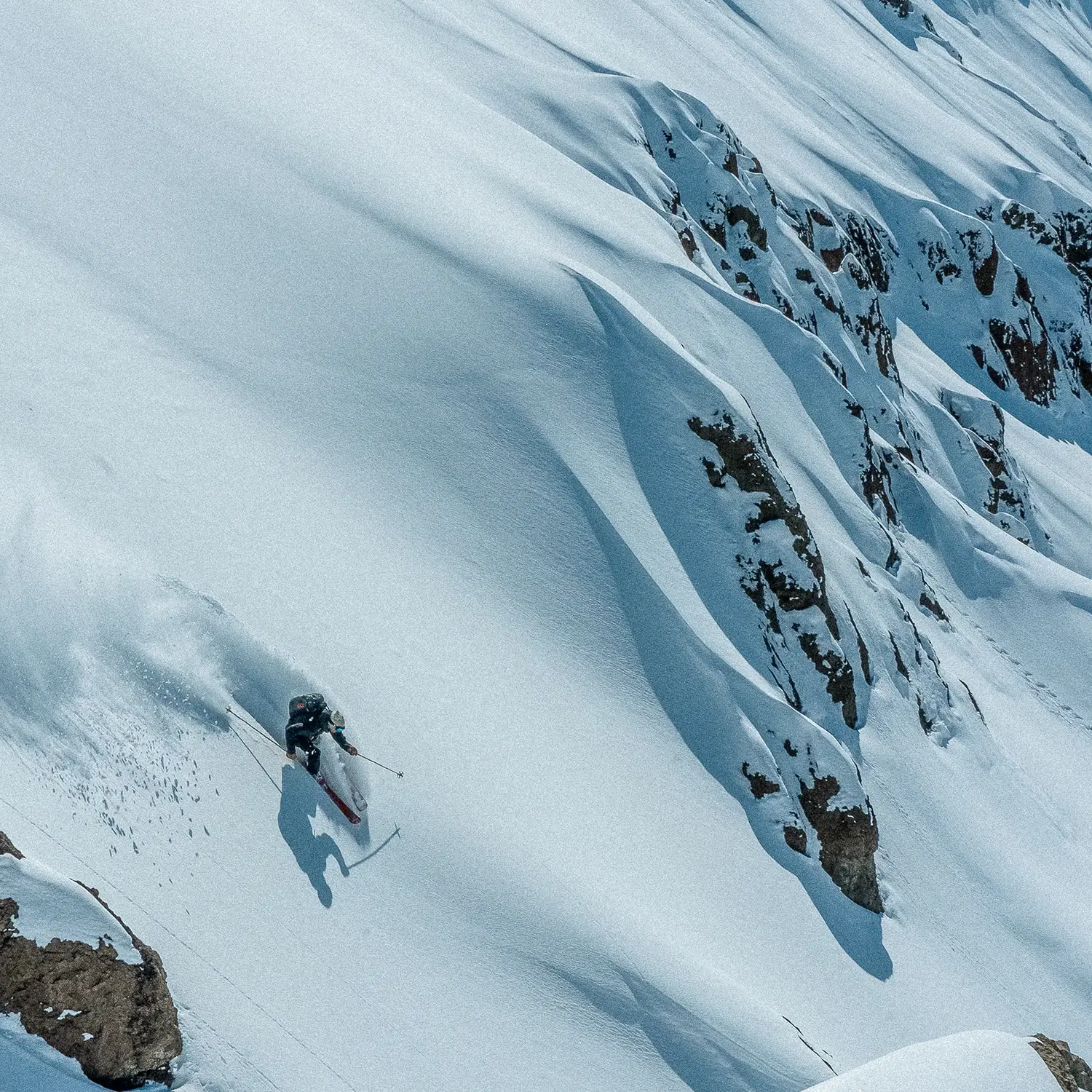
Two different ways to ski the Andes
Chile’s ski season generally runs from late June into September or early October, although opening dates and conditions depend heavily on each winter’s snowfall. July and August are usually the core months of the season.
Within that window, visitors can experience the Andes in two very different ways.
Resort skiing provides lift access, marked pistes, rental facilities, ski schools and a relatively structured environment. It is efficient, accessible and easy to organize.
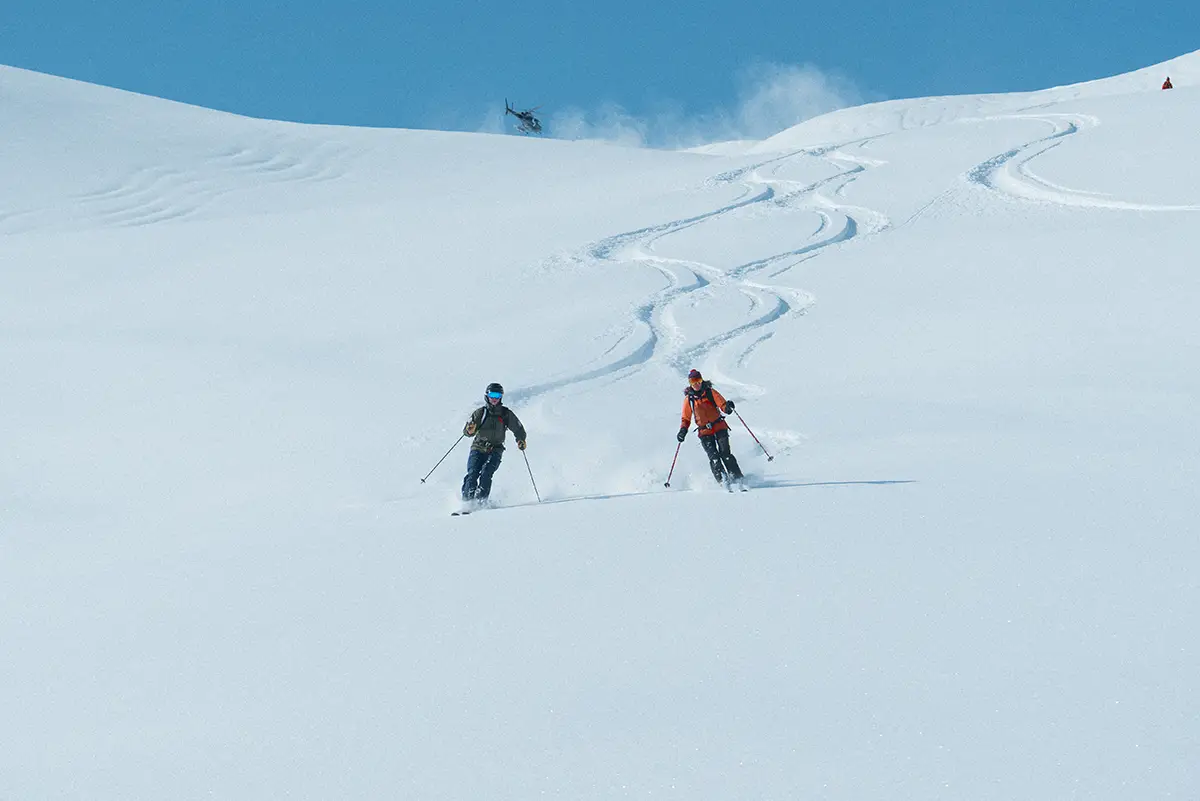
Backcountry skiing takes place outside controlled resort terrain. Routes are selected according to snow stability, weather, visibility, group ability and mountain access. The goal is not simply to ski more vertical metres, but to experience terrain that cannot be reached from a standard lift system.
Neither option is automatically better. The right choice depends on what you want from the trip.
When a Chilean ski resort is the right choice
A resort is usually the best starting point when your priorities are convenience, repetition and predictable logistics.
It allows you to ski multiple runs, return easily to the base area and adjust the day without committing to a long mountain objective. Resorts are also the most suitable environment for beginners and developing skiers who need to improve technique before moving into uncontrolled terrain.
Resort skiing is usually the better option if you:
- Are learning to ski or snowboard
- Want lessons with a ski instructor
- Prefer groomed runs and clearly marked terrain
- Are travelling with people of different ability levels
- Need equipment rental, restaurants and other services nearby
- Want to maximize downhill skiing without an uphill approach
The Santiago region contains Chile’s largest concentration of ski areas. Valle Nevado, La Parva, El Colorado and Farellones form a high-altitude ski corridor within reach of the capital, offering terrain and services for a broad range of levels.
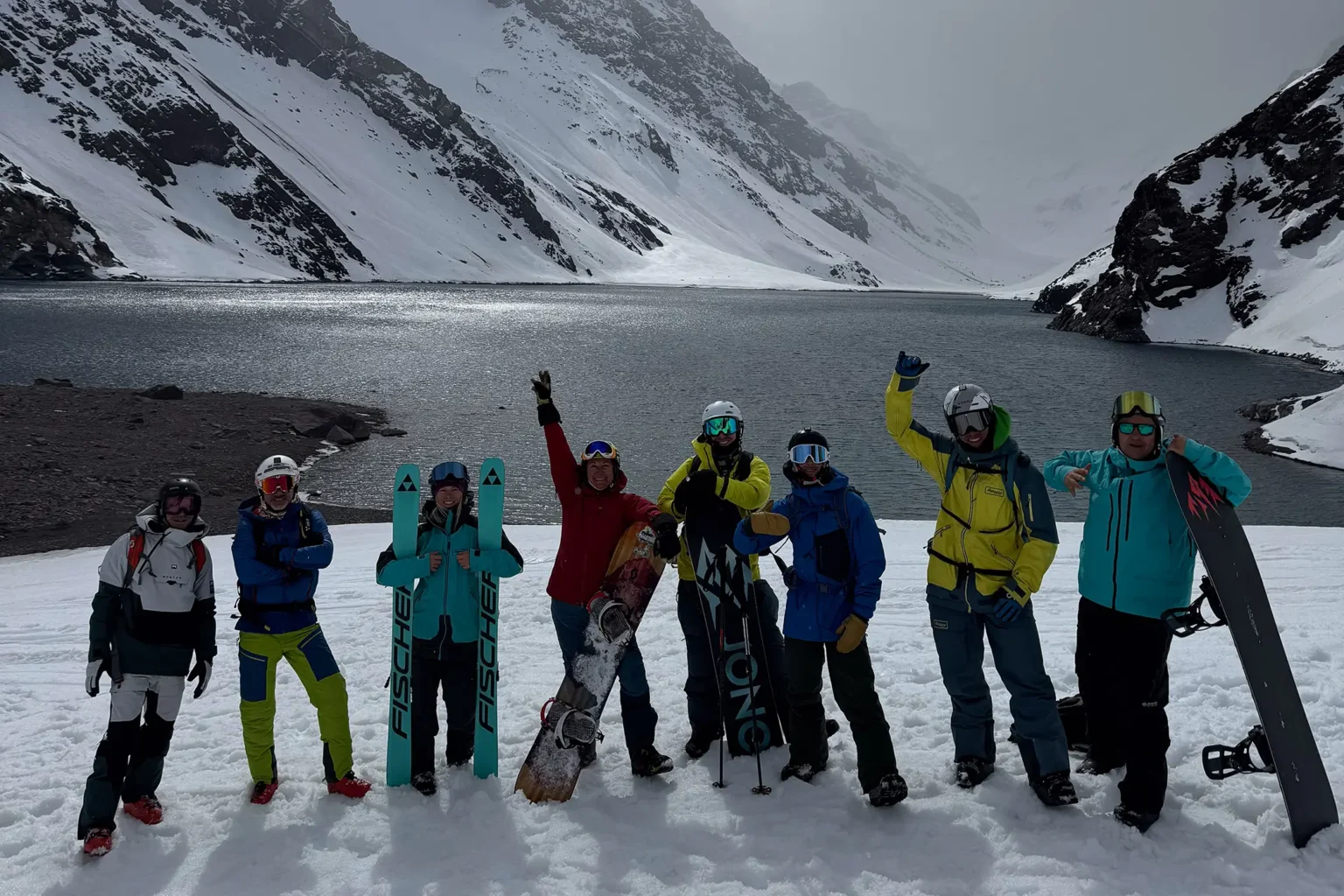
Farther north of Santiago, Portillo offers a more self-contained ski experience beside Laguna del Inca. The resort combines ski-in/ski-out accommodation with terrain for beginner, intermediate and advanced skiers.
In southern Chile, Nevados de Chillán and Corralco combine lift-accessed skiing with volcanic landscapes, native forests and a more remote mountain atmosphere. Corralco sits on the slopes of Lonquimay Volcano inside the Malalcahuello National Reserve, while Nevados de Chillán is known for skiing close to forests and thermal-water facilities.
What backcountry skiing offers instead
Backcountry skiing is not simply resort skiing without lifts.
The experience begins before the descent. It involves studying conditions, choosing an objective, moving through the mountain and continuously adapting the plan. Some days may include long skin tracks and open alpine slopes. Others may involve volcanic terrain, high passes, glacier travel or a descent selected because it holds the best snow available that day.
Backcountry skiing is usually a better fit if you:
- Already ski confidently on advanced resort terrain
- Enjoy earning your descent through ski touring
- Want to ski away from lift systems and crowded pistes
- Value exploration more than the number of runs completed
- Are comfortable with changing plans and mountain conditions
- Want a route adapted to your ability and objectives
The attraction is not necessarily steeper terrain.
For many skiers, the real value lies in silence, scale and access: moving through a wide Andean landscape, reaching terrain that feels remote and skiing a line chosen specifically for the group.
A good backcountry day may involve only one major descent. What makes it memorable is the complete mountain journey around it.
Central Andes or southern volcanoes?
Chile is unusually long, and the character of the skiing changes significantly from one region to another.
Central Andes
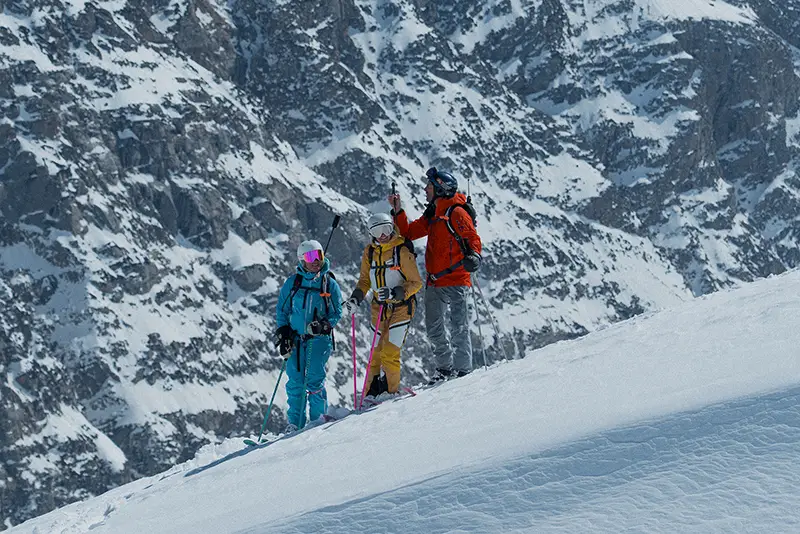
The mountains surrounding Santiago and Portillo are high, dry and visually immense. Skiing often takes place above the tree line, with long valleys, exposed ridges and broad alpine faces.
This region works especially well for:
- Short ski trips based in Santiago
- Resort and backcountry combinations
- High-altitude ski touring
- Freeride-oriented days
- Skiers looking for large alpine terrain
The central resorts can also provide a useful starting point for the trip. A skier may spend the first day adjusting to the altitude and local snow before moving into guided backcountry terrain.
Access, however, is strongly affected by winter road controls, traffic and weather. Route G-21 toward Farellones and the Santiago ski areas can operate with restricted uphill and downhill schedules on busy winter days.
Southern volcanoes
Southern Chile offers a very different landscape.
Here, ski touring can take place on the slopes of large volcanoes surrounded by forests, lakes and volcanic terrain. The geometry is often more continuous than in the central Andes, creating long ascents and sustained descents when snow and weather align.
This region works especially well for:
- Multi-day ski touring trips
- Skiers who enjoy summit-style objectives
- Travellers looking for a broader Chilean journey
- Groups that value landscapes and cultural variety
- Resort and volcano combinations
Corralco provides lift access directly on Lonquimay Volcano, while the wider Araucanía and Lakes regions open the possibility of touring on several different volcanic objectives.
Because weather systems can move quickly through southern Chile, flexibility is essential. The best itinerary is usually one that allows objectives to change rather than depending on a single fixed summit.
Cochamó is primarily known for long traditional climbing on granite.
Routes can combine crack climbing, friction slabs, corners, chimneys and exposed face sections. The style may feel very different from sport climbing, where fixed protection is generally more frequent and retreat is often simpler.
The routes are not uniform. Some objectives are relatively approachable for climbers beginning to explore longer multi-pitch terrain, while others are serious big-wall undertakings suited to experienced teams.

Do you need an instructor or a mountain guide?
This distinction is important.
A ski instructor teaches skiing technique, normally within a resort or another designated teaching environment. The focus may include balance, turning, control, confidence and progression on marked runs.
A mountain guide manages an objective in mountain terrain. The role includes evaluating weather, snowpack, terrain, access, group ability and the consequences of each route decision.
Choose a ski instructor when:
- You are learning the fundamentals
- You need to improve your technique
- You are skiing inside a resort
- Your main goal is better control and confidence
Choose a mountain guide when:
- You want to leave controlled resort terrain
- The day involves ski touring or ski mountaineering
- The route depends on snow and weather assessment
- You are unfamiliar with the local mountain environment
- The terrain may include glaciers, technical passages or complex access
Being an excellent downhill skier does not automatically provide the experience required to manage backcountry terrain independently.
Strong technique is one component. Route selection, avalanche awareness, navigation, group management and local knowledge are separate skills.
At Andes Big Mountain, our lead guides hold the UIAGM / IFMGA International Mountain Guide certification, the highest internationally recognized professional qualification for guiding in alpine climbing, ski mountaineering and complex mountain terrain.
How to choose the right ski experience
The simplest approach is to begin with your real objective rather than with a list of famous destinations.
Choose mainly resort skiing when:
- This is your first ski trip
- You want several full days of lift-accessed skiing
- Your group includes beginners or mixed levels
- Comfort and simple logistics are priorities
- You want lessons, rentals and services in one place
Choose guided backcountry skiing when:
- You are already a solid skier
- You want to explore terrain beyond marked runs
- You enjoy uphill travel and full mountain days
- You value privacy, adaptation and local knowledge
- The journey matters as much as the descent
Combine both when:
- You are visiting Chile for the first time
- You want to assess conditions before committing to an objective
- You need time to adapt to altitude
- Your group wants both resort mileage and a mountain experience
- You want flexibility if weather conditions change
For many international visitors, the strongest itinerary is not resort versus backcountry, but a carefully planned combination of both.
A first day at the resort can help evaluate skiing ability, equipment and snow conditions. The following days can then be adapted around the best available terrain — whether that means touring from the Santiago mountains, exploring the Portillo region or travelling south toward Chile’s volcanoes.
Resort Access or Guided Backcountry?
Our ski programs can be adapted around your experience, travel dates and objectives.
- Central Andes freeride and ski touring
- Portillo and Farellones-based programs
- Southern Chile volcano ski expeditions
- Private guided days and multi-day itineraries
- Resort and backcountry combinations
The mountain does not offer the same conditions every day. Your itinerary should not pretend that it does.